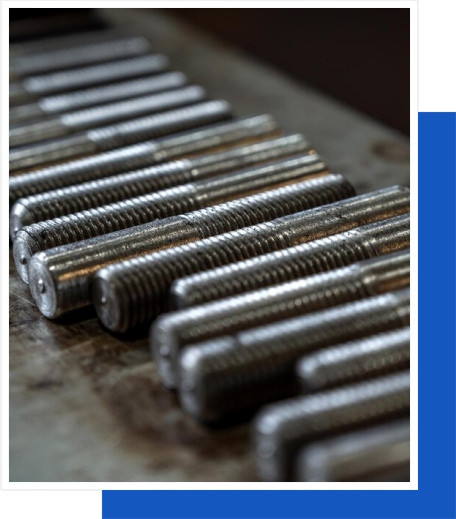

Advanced Stud Welding Techniques for Modern Construction
The construction industry continues to evolve with new technologies and techniques that improve efficiency, safety, and quality. Stud welding, a critical fastening method used in commercial and industrial construction, has seen significant advancements in recent years. This comprehensive guide explores the latest innovations in stud welding technology and how they're revolutionizing modern construction projects.
Understanding Modern Stud Welding
Stud welding is a process that joins metal studs to a base material through the application of heat and pressure. This technique has become indispensable in modern construction for attaching various components to structural steel, concrete decks, and other materials. The evolution of stud welding technology has brought about more precise, efficient, and reliable methods.
Key Advantages of Advanced Techniques
- Improved weld penetration and strength
- Reduced heat-affected zones
- Enhanced precision and repeatability
- Faster installation times
- Better quality control and monitoring
- Reduced material waste
Latest Equipment Innovations
The advancement in stud welding equipment has been remarkable. Modern machines feature digital controls, automated positioning systems, and real-time monitoring capabilities that ensure consistent, high-quality welds.
Digital Control Systems
Today's stud welding equipment incorporates sophisticated digital control systems that allow operators to:
- Set precise welding parameters
- Monitor weld quality in real-time
- Store and recall welding programs
- Generate detailed quality reports
Pro Tip
Digital control systems can reduce welding defects by up to 85% compared to traditional manual methods, significantly improving project quality and reducing rework costs.
Automated Positioning and Feed Systems
Automated systems have transformed stud welding efficiency. These systems can:
- Position studs with millimeter precision
- Maintain consistent spacing and alignment
- Operate continuously with minimal operator intervention
- Adapt to various stud sizes and materials
Advanced Welding Processes
Capacitor Discharge (CD) Welding
CD welding represents one of the most significant advances in stud welding technology. This process uses stored electrical energy to create a high-intensity, short-duration weld that offers several advantages:
- Minimal Heat Input: Reduces distortion and maintains material properties
- No Flux Required: Eliminates post-weld cleaning operations
- Thin Material Compatibility: Suitable for materials as thin as 0.6mm
- All-Position Welding: Can be performed in any position
Arc Stud Welding Improvements
Traditional arc stud welding has also seen significant improvements:
- Enhanced ceramic ferrule designs for better protection
- Improved timing controls for consistent arc initiation
- Advanced flux formulations for cleaner welds
- Better electrode materials for longer equipment life
Quality Assurance and Testing
Modern stud welding incorporates advanced quality assurance methods that ensure every weld meets specified standards:
Non-Destructive Testing (NDT)
- Ultrasonic Testing: Detects internal weld defects without damaging the structure
- Magnetic Particle Testing: Identifies surface and near-surface discontinuities
- Visual Inspection: Enhanced with digital cameras and measurement systems
- Pull Testing: Automated systems for consistent load testing
Real-Time Monitoring
Advanced monitoring systems provide immediate feedback on weld quality, including:
- Current and voltage profiles during welding
- Arc duration and stability measurements
- Temperature monitoring of the weld zone
- Automatic defect detection algorithms
Material Innovations
The development of new materials has expanded the applications of stud welding:
Advanced Stud Materials
- High-Strength Steels: For demanding structural applications
- Stainless Steel Alloys: For corrosive environments
- Aluminum Studs: For lightweight construction
- Composite-Ready Studs: Designed for composite deck applications
Applications in Modern Construction
High-Rise Buildings
In high-rise construction, advanced stud welding techniques enable:
- Faster installation of metal decking systems
- Improved seismic resistance through better connections
- Reduced construction time and costs
- Enhanced structural integrity
Infrastructure Projects
For bridges, tunnels, and other infrastructure:
- Long-term durability in harsh environments
- Resistance to dynamic loading
- Simplified maintenance requirements
- Compliance with stringent safety standards
Future Trends and Developments
The future of stud welding technology promises even more exciting developments:
Artificial Intelligence Integration
- Predictive maintenance of welding equipment
- Automatic parameter optimization
- Pattern recognition for defect detection
- Machine learning for process improvement
Robotics and Automation
- Fully automated stud welding cells
- Integration with building information modeling (BIM)
- Remote operation capabilities
- Adaptive control systems
Best Practices for Implementation
To successfully implement advanced stud welding techniques in your projects:
- Training and Certification: Ensure operators are properly trained on new equipment and techniques
- Quality Control Procedures: Establish comprehensive QC protocols
- Equipment Maintenance: Follow manufacturer recommendations for optimal performance
- Documentation: Maintain detailed records of welding parameters and test results
- Continuous Improvement: Regularly review and update procedures based on industry developments
Conclusion
Advanced stud welding techniques represent a significant leap forward in construction technology. By embracing these innovations, construction professionals can achieve higher quality results, improve efficiency, and reduce costs. The key to success lies in understanding the technology, investing in proper equipment and training, and maintaining a commitment to quality and continuous improvement.
At Santana Stud Welding, we stay at the forefront of these technological advances, ensuring our clients benefit from the latest innovations in stud welding technology. Our team of certified professionals is equipped with state-of-the-art equipment and extensive experience in implementing these advanced techniques across a wide range of construction projects.
Ready to Implement Advanced Stud Welding Techniques?
Contact our expert team to learn how advanced stud welding can benefit your next construction project.
Get Expert Consultation